
Reach
Go to people in community organizations, shelters and the other places they use, with peers and flexible ways of welcoming them.
Since 2019, Métropoles Sans Hep C has brought together community, clinical, academic and public health partners to improve access to hepatitis C testing and treatment in Montréal.
We want to build on this experience to develop integrated care pathways for sexually transmitted and blood-borne infections (STBBIs), connected with harm reduction and addiction care. The aim: to reach people who face barriers to accessing services and to support them from testing through treatment and follow-up.
Testing is not enough if the person does not receive their result, cannot access treatment or loses contact with the team. Travel, multiple appointments and housing instability can interrupt this pathway. Our work with people with lived experience highlights the importance of services that are accessible where they live, clear information and continuous support.
Context: 5,036 people experiencing visible homelessness in Montréal at the point-in-time count of April 15, 2025 (preliminary results; MSSS, Tout le monde compte 2025).
A single pathway connects STBBI prevention, testing, treatment and follow-up. Services are offered on site where possible, with support to reach partner services where needed.
Go to people in community organizations, shelters and the other places they use, with peers and flexible ways of welcoming them.
Offer STBBI prevention and testing, then facilitate confirmation of the diagnosis and access to treatment. Connect this care with harm reduction and addiction services, as needed.
A designated contact person helps people get their results, arrange appointments and access medication. They maintain the link between the person, the organization, the pharmacy and the clinical team.
Measure the number of people reached, tests performed, time to treatment and retention in care, as well as people's experience and the resources required.
My treatment was easy… I was staying at OBM [Old Brewery Mission] and they asked me if I had Hep C and I said yes I do and they said we can do something about that and a week later I was taking a pill.
I kind of lost the apartment… I thought it was a shame because I could have kept going with it [treatment], but like, I didn't get the support I wanted or hoped for…
There's a way to treat them properly. That's the difference between the nurses here [supervised injection site] and at the hospital. These guys know what's up. They've been around the population; the way they treat you is completely differently. Confidentiality, respect…
The proposal builds on interventions carried out with the coalition's partners and on the cohorts and databases of its research teams. Together, this work makes it possible to identify gaps in care and to evaluate ways of addressing them.
Tested for 18 months with Montréal public health, the intervention that reconnects people who were diagnosed and then lost to follow-up has been part of its routine activities since December 2025.
CADRE-C, PHARMA-C+ and SCALE-POCT help develop and evaluate community-based hepatitis C testing, in community organizations and pharmacies, and linkage to treatment.
Linked administrative databases from Québec make it possible to measure the burden of infectious diseases (HIV, hepatitis B, hepatitis C), health outcomes and the pathway from testing to treatment.
Has followed people living with HIV and hepatitis C in Montréal and across Canada since 2003: progress toward elimination, disengagement from care and its consequences.
Has followed people who inject drugs in Montréal since 2004: hepatitis C and HIV incidence, housing instability, and the protective effect of opioid agonist treatment.
People who use the services contribute to the coalition in three ways: in design, through the consultations and interviews that set priorities for access to care; in delivery, with a community peer navigator on the team; and in evaluation, through interviews about their experience of services.

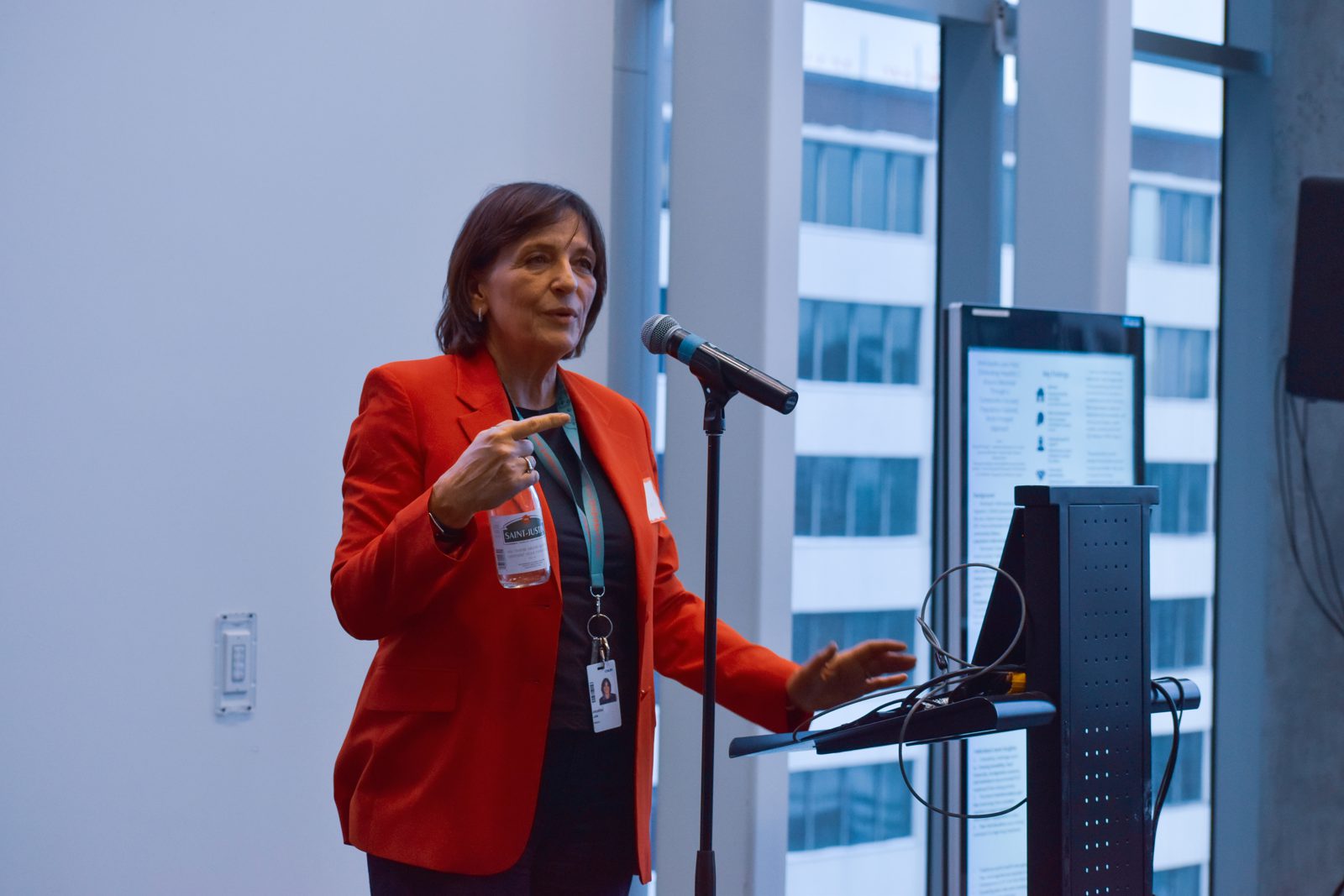

Coalition meeting at the CHUM, February 2026.
CAPAHC sits on the co-directorate; partner organizations host the teams and deliver testing.
MUHC, CHUM and Jewish General Hospital: viral infections, addiction medicine, migrant health, and the health of Indigenous people in vulnerable situations.
Montréal public health integrates proven interventions into its activities.
McGill University (RISE³), Université de Montréal (HEPCO) and the Lady Davis Institute of the Jewish General Hospital (linked databases): measuring outcomes and implementation conditions.
Proposal in preparation with partners. Sites, timeline and funding to be confirmed.
We propose a deployment in three to five Montréal settings starting in 2027. The support sought would strengthen on-site STBBI care, support between services and the evaluation of results, building on existing organizations and teams.
We wish to agree on participating sites, clinical responsibilities, funding and outcome targets for 2027–2030. The evaluation will guide the continuation of the model and its adaptation to other settings in Québec.